

 Have a question?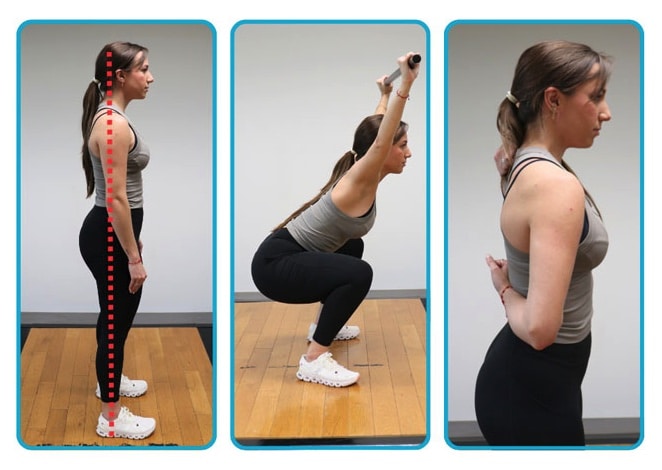
The NCSF Corrective Exercise Specialist (CES) program is an excellent specialization course for any personal trainer certified through NCSF. It will teach you evidence-based corrective techniques to help your client avoid injury and improve their mobility.
In this review, I cover what to expect from the NCSF CES, pricing, pros & cons, and who is should take this course.
If you are unsure of which certification to choose, I suggest you take this quiz.
Quick Facts: NCSF CES Program
- Organization: National Council on Strength & Fitness
- Program Type: Corrective Exercise Specialization course
- Format: 100% online, self-paced
- Study Materials: Instructional videos, quizzes, and program samples
- Difficulty Level: Easy
- Time to Complete: 1-2 months part-time
- Cost: $399
What is the NCSF CES?
The NCSF Corrective Exercise Specialist is a specialty course offered by the National Council on Strength & Fitness (NCSF). It’s designed for fitness professionals (trainers, coaches, allied health providers) who want to go beyond general training and specifically assess, identify, and correct movement dysfunctions and muscular imbalances.
This is not a replacement for a basic personal training certification — it’s an add-on specialist credential meant to expand your skillset with evidence-based corrective strategies that help clients move better, reduce pain, and prevent injuries.
Who Should Take the CES Program?
This certification is ideal if you already have a baseline fitness credential (like a personal trainer certification) and you:
- Want to help clients with pain, poor posture, and movement dysfunction
- Plan to work with special populations (older adults, injury-prone clients)
- Aim to add advanced corrective strategies to your offerings
- Seek continuing education credits (7 NCSF CEUs) for recertification
It’s less useful if you’re brand new to fitness; the content assumes a basic understanding of exercise principles.
Is the NCSF CES worth it?
- Practical, evidence-based corrective methods
- Earns 7 NCSF CEUs upon completion
- Low price
- Self-paced flexibility
- High value
- Not as comprehensive as other corrective certifications
- Lesser known organization
Exclusive PTP CPT Offers |
||
|---|---|---|
Best Overall Cert | Best Online Cert | Best Study Materials |
Gold Standard Cert | A Good Option | Best CPT for you?  |
Curriculum Review
The curriculum covers a range of content focused on human movement and corrective strategies, including:
- Movement assessment fundamentals
- Postural distortions and muscular imbalances
- Functional tests (overhead squat, field tests)
- Corrective exercise techniques from head to toe
- Stability and mobility strategies
- Self-myofascial release (e.g., foam rolling)
- Program design for corrective and functional training
You even get sample case studies for clients working through postural issues.
This material is delivered mainly through online lessons, instructional videos, and quizzes.
You do not get a full textbook, but you do get very thorough video lessons and notes for each video, which give you a brief synopsis of what’s covered in each lesson.
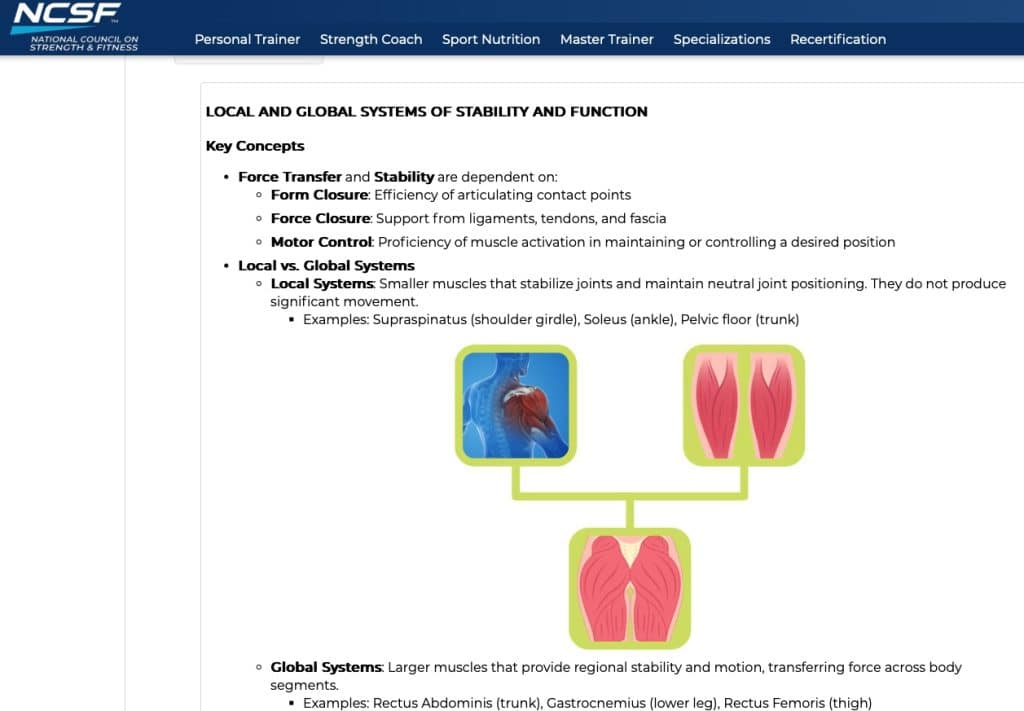
The NCSF Corrective Exercise Specialist is highly practical, movement-focused, and clearly written for working trainers rather than clinicians.
The strongest feature is the Integrated Model of Function (form closure, force closure, motor control, and emotion), which provides a solid framework for understanding joint stability and movement efficiency.
The sections on inner vs. outer unit function, sling systems, and force transfer are particularly strong and do an excellent job connecting biomechanics to real-world performance.
The overhead squat assessment and field testing sections are also well structured, giving trainers clear observational checklists and muscle imbalance correlations they can immediately apply with clients.
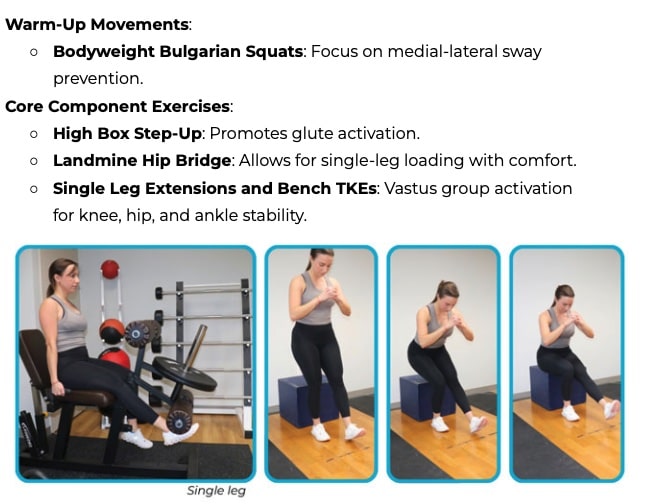
Where the textbook excels most is in its exercise library and applied progressions. The “head-to-toes” corrective sections provide dynamic warm-ups, core integration drills, unilateral variations, loading progressions, and cool-down strategies. It emphasizes movement patterns over isolated muscle fixes and includes helpful coaching cues throughout, making it highly usable in real training environments.
The discussion of open vs. closed chains and circuits, as well as asymmetrical and unfamiliar loading, adds depth to programming considerations.
Overall, I thought the curriculum was easy-to-understand and covered all the major details you need from a Corrective Exercise certification, but it is much less detailed than ISSA or NASM’s CES.
NCSF CES Cost & Value
- List Price: ~$399
- Typical Sale Price: ~$299 (often discounted)
- Earns 7 NCSF CEUs upon completion
Compared to other corrective exercise certifications, NCSF’s price point is competitive — especially if you’re already invested in NCSF’s continuing education ecosystem. There’s no separate exam like you’d see with some full certification pathways — completion earns the credential.
Even the list price is almost half of what you’d get from most of the other corrective exercise specializations, so the NCSF CES is certainly worth it, especially if you’re already a certified personal trainer through NCSF.
You’re going to have to renew your CPT anyway, and this course gives you a way to do just that.
Pros
- Focused on evidence-based corrective methods that are practical and actionable.
- Helps trainers expand services and better serve clients with dysfunction or pain.
- Earns continuing education units which count toward recertification.
- Often available at a discounted rate.
Cons
- Not a standalone training certification — you still need a base CPT or equivalent.
- The course is self-paced and online only, so you’ll need discipline to complete it.
- Less recognized than some specialty credentials from organizations like NASM or ACE (no large industry-wide reputation compared to those).
Final Verdict
The NCSF Corrective Exercise Specialist is a solid and affordable specialty credential for fitness professionals who want to add movement assessment and corrective strategies to their toolkit. It’s especially worthwhile if you already work with clients who have pain, postural issues, or limited mobility.
🎓 It’s not a replacement for a full certification but serves as a valuable supplement that can differentiate you in a competitive market.
Overall Rating: ⭐⭐⭐⭐☆ (4/5)
Would I recommend it? Yes — especially for trainers looking to advance their skills and offer more comprehensive client solutions.


Tyler Read
PTPioneer Editorial Integrity
All content published on PTPioneer is checked and reviewed extensively by our staff of experienced personal trainers, nutrition coaches, and other Fitness Experts. This is to make sure that the content you are reading is fact-checked for accuracy, contains up-to-date information, and is relevant. We only add trustworthy citations that you can find at the bottom of each article. You can read more about our editorial integrity here.